
This is my complete Human Performance Edge weekly workout routine
This is my complete Human Performance Edge weekly workout routine—a seven-day strength, cardio, core, mobility, and recovery protocol built around consistency and performance.
In this video, I break down my personal Monday-through-Sunday training split, including the muscle groups I train each day, my abdominal work, dedicated cardio, and the recovery practices I use alongside the program.
MY WEEKLY TRAINING SPLIT
Monday: Back, biceps, and abs
Tuesday: Chest, shoulders, triceps, and abs
Wednesday: Quadriceps and abs
Thursday: Back, biceps, and abs
Friday: Chest, shoulders, triceps, and abs
Saturday: Long-duration cardio
Sunday: Full legs—quadriceps, hamstrings, glutes, hips, and abs
Sitting-Rising Test:
What Your Score Says About Longevity
Can you sit on the floor and stand back up without using your hands or knees?
The Sitting-Rising Test measures strength, balance, flexibility, coordination, and functional mobility—all in one simple movement.
In this Human Performance Edge video, Kristian Magnuson explains:
• How to perform the Sitting-Rising Test
• How the 10-point scoring system works
• What researchers found about SRT scores and mortality
• Why the test reflects several components of functional fitness
• How strength, mobility, balance, and body composition may affect your performance
The maximum score is 10: five points for sitting down and five for standing back up. Points are deducted when you use a hand, knee, forearm, or another form of support. A loss of balance may also reduce the score. Research has found an association between lower Sitting-Rising Test scores and higher natural and cardiovascular mortality risk in middle-aged and older adults.
This is an observational association—not proof that a low score directly causes a shorter lifespan or that the test can predict exactly how long an individual will live.
What was your score?
The Human Performance Edge Weekly Workout Routine: My 7-Day Strength & Cardio Protocol

Home Sauna and Cold Plunge: Building a Real Contrast Therapy Protocol
Home sauna and cold plunge, done right. What the evidence actually says about sequencing, timing, and what heat adds that cold alone can’t do.
WHOOP vs. Smart Ring: Which Wearable Actually Improves Your Training?
WHOOP or a smart ring like Oura — which one actually improves your training? Here’s what the validation studies say each device gets right, and where both fall apart.
Creatine Timing: Does Taking It After a Workout Actually Matter?
Does creatine timing around your workout actually matter? Here’s what the actual trial evidence says — and why consistency beats the clock.
Hybrid Training Explained: Building Strength and Endurance Together
What “hybrid training” actually means, what the research says about losing strength to cardio, and how to structure a week that builds both — without guessing.
Cold Plunge: What the Evidence Actually Says
What cold plunging actually does for stress, soreness and immunity — and where the hype outruns the evidence, plus the dosing that works.
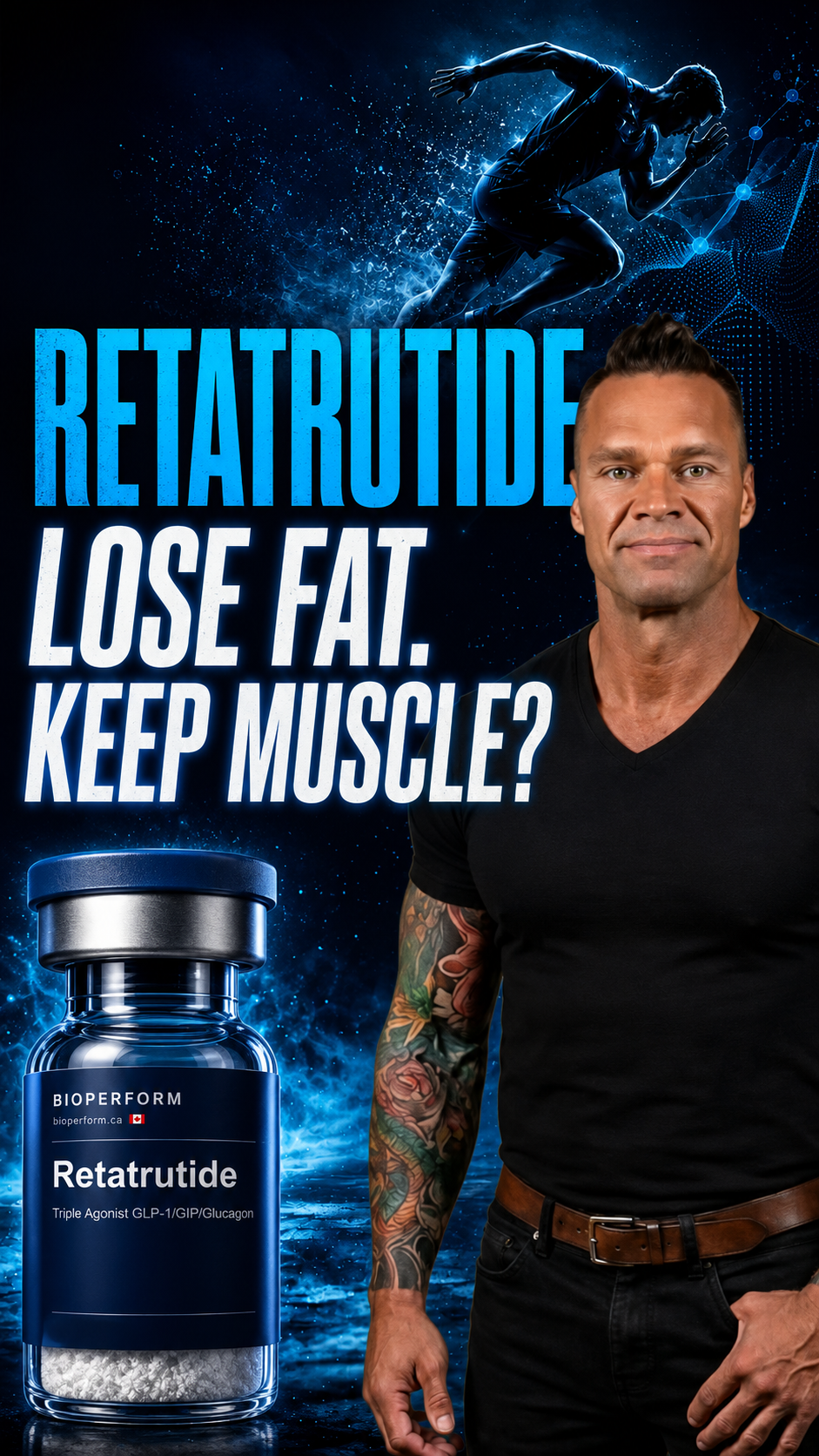
Retatrutide: Triple-Agonist Science and What Phase 3 Means
What Retatrutide’s new Phase 3 results actually show—and why this triple agonist remains investigational, unapproved and inappropriate for self-directed use.
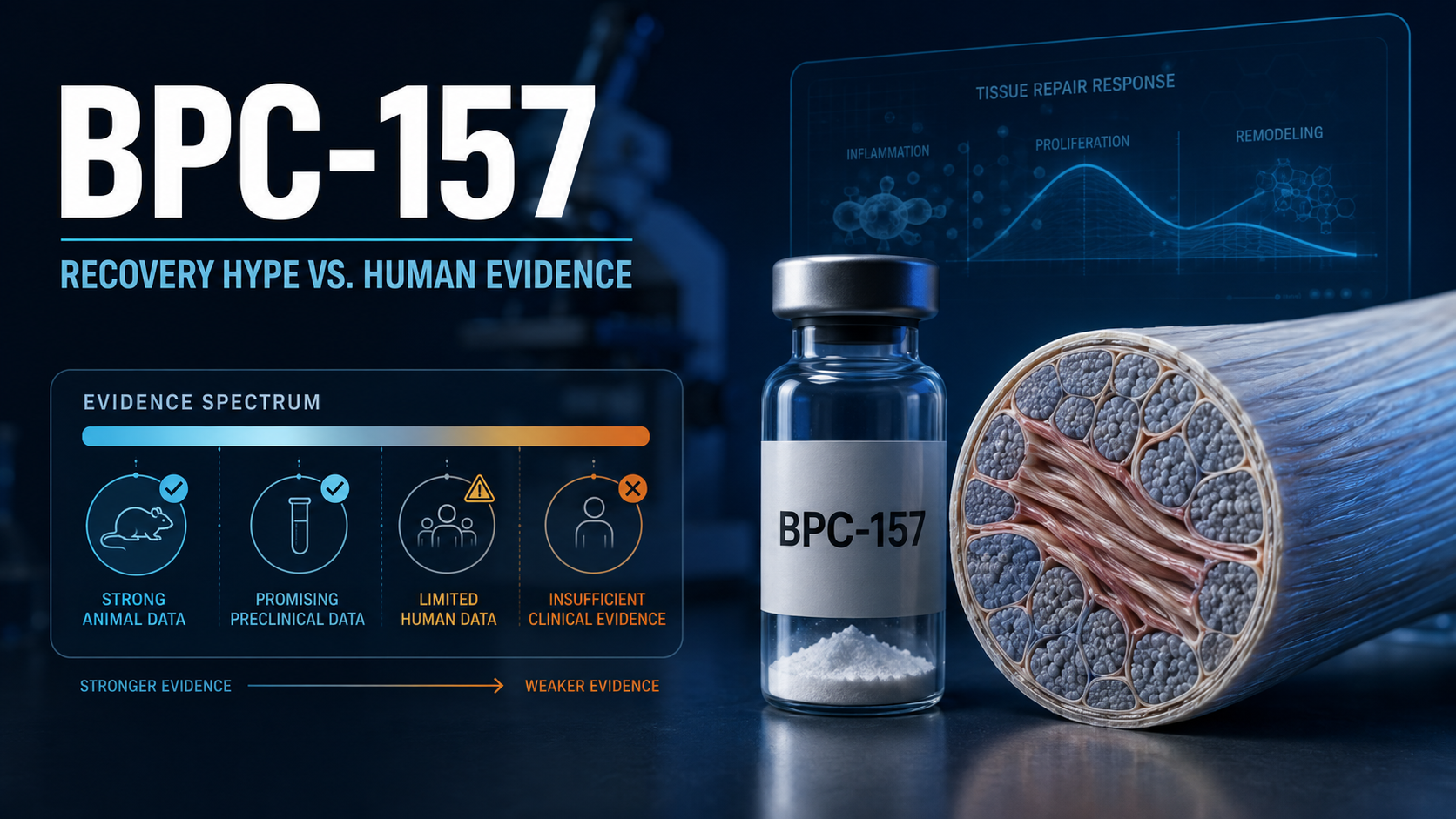
BPC-157: Recovery Hype Versus Human Evidence
What BPC-157 recovery research actually shows—animal findings, limited human evidence, FDA concerns, safety unknowns and anti-doping status.
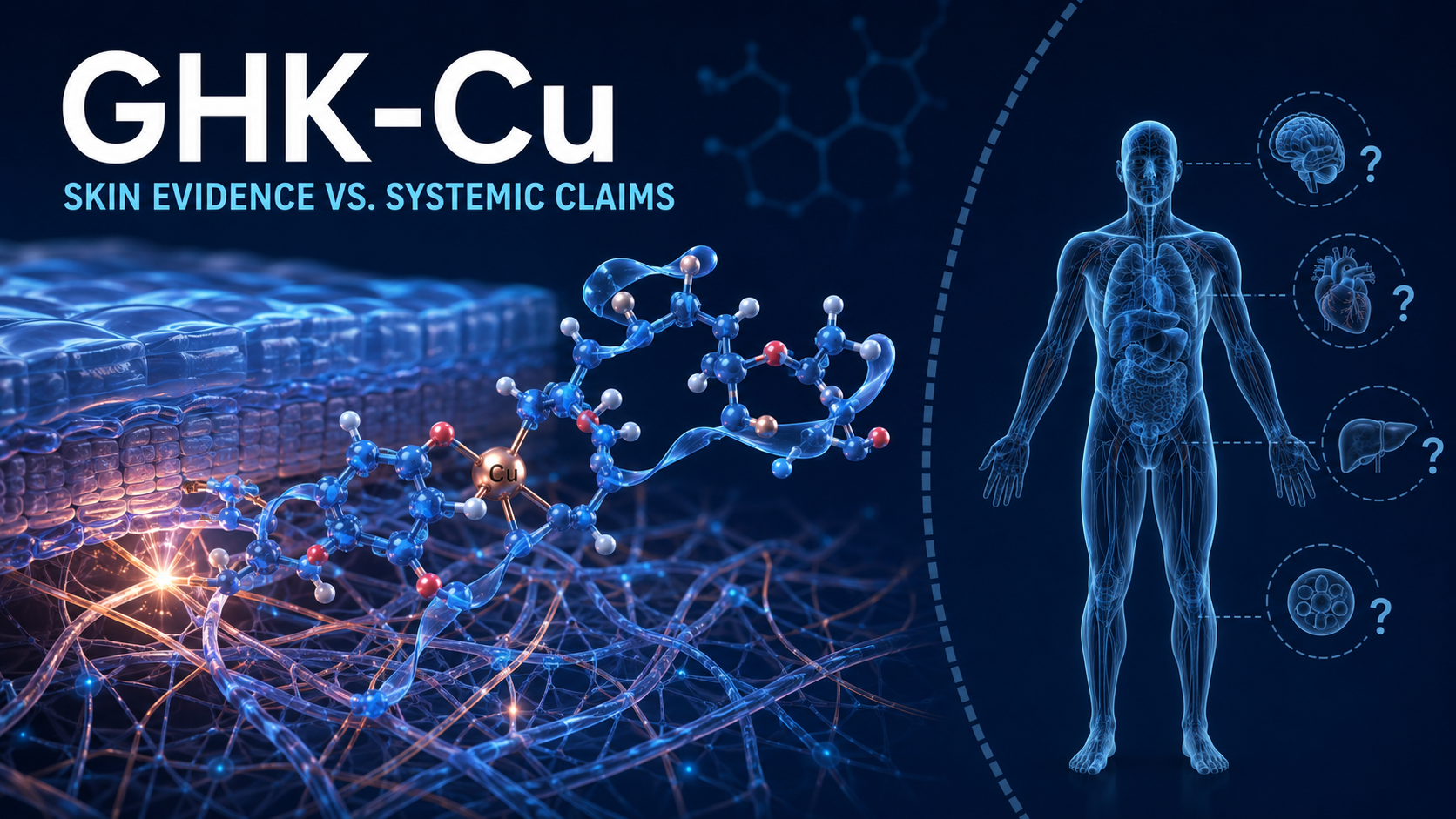
GHK-Cu: Skin Evidence Versus Systemic Claims
What GHK-Cu research supports for topical skin use—and why cosmetic evidence should not be stretched into injectable or systemic rejuvenation claims.
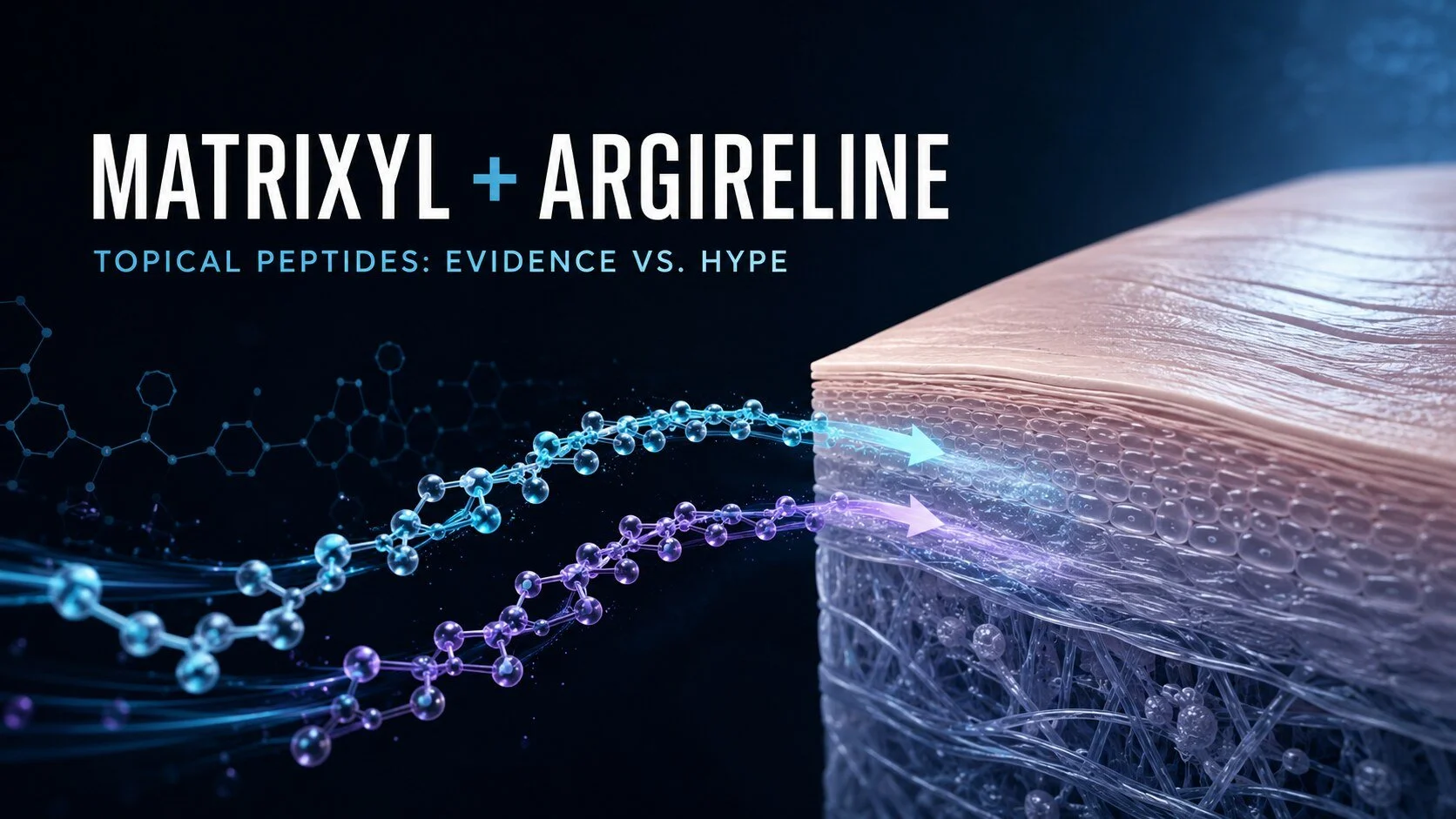
Matrixyl and Argireline: What Topical Peptides Can Plausibly Do
Matrixyl and Argireline are popular topical peptides for fine lines, but the evidence supports modest cosmetic benefits—not “Botox in a bottle.” Here is what controlled human studies show, what remains uncertain, and how to evaluate a product safely.

Epitalon / Epithalon: Circadian Biology and Anti-Aging Claims
What Epitalon’s circadian, sleep and telomere research actually shows—and why current evidence does not support confident anti-aging or insomnia claims.
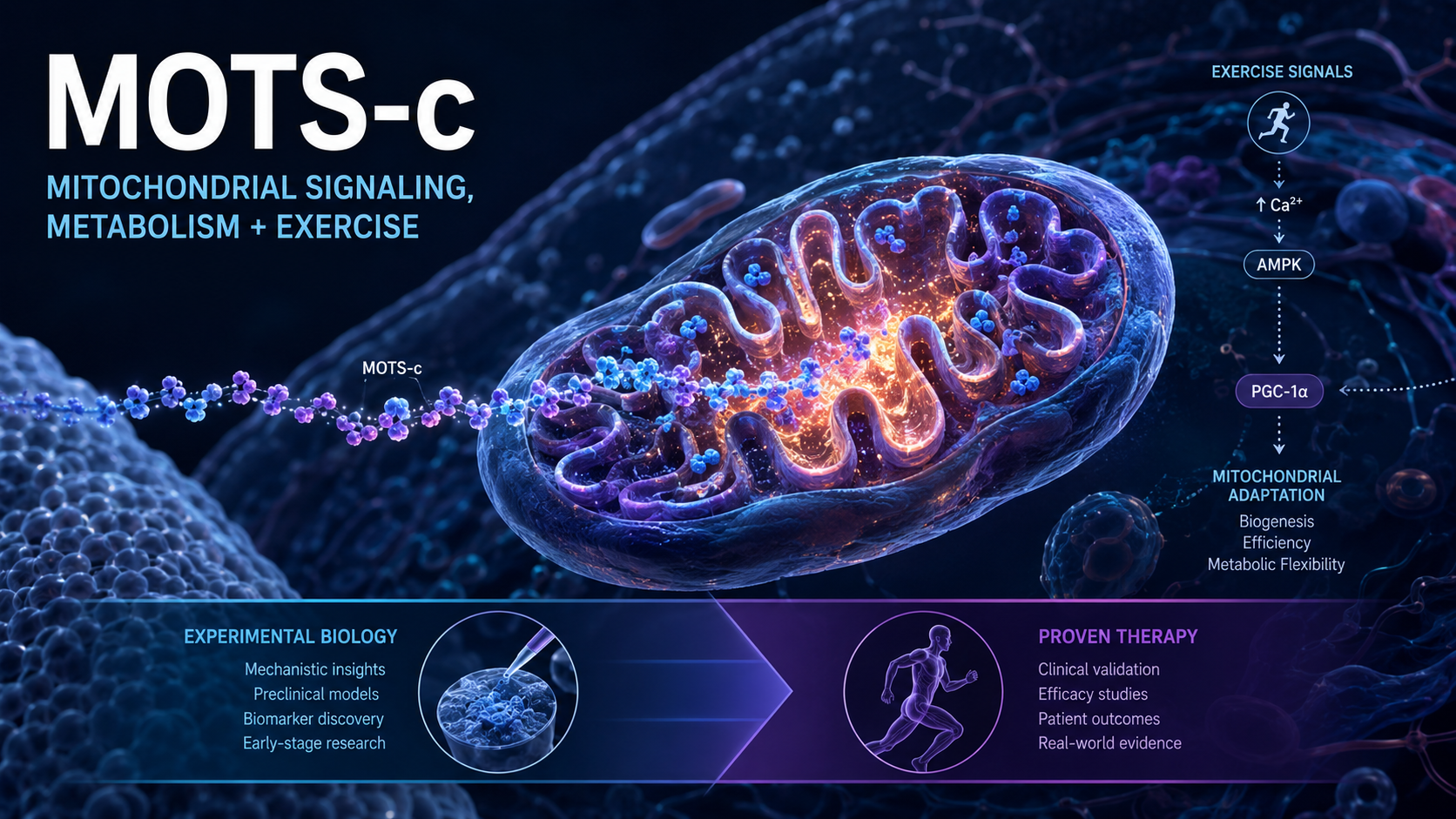
MOTS-c: Mitochondrial Signaling, Metabolism and Exercise
What human research actually shows about MOTS-c, mitochondrial signaling, metabolism and exercise—and why promising biology does not yet establish synthetic MOTS-c as a safe performance, weight-loss or longevity treatment.